Tuesday, October 6, 2020

Trump, the Nobel Prize and the Ivory Tower


Academics, like political pundits, often feel invisibly compelled to become classic killjoys. Such is the case with regard to the recent Middle East peace deals, orchestrated by the Trump administration, between Israel, the UAE, and Bahrain. What should be a cause for universal celebration has predictably been downplayed, not only in the international press but among those ensconced in scholarly ivory towers. Jonathan Cristol, Research Fellow at Adelphi University, cynically observed, “…these deals do not usher in some sort of new era of peace and harmony.” Middle East professor at Lehigh University, Henry Barkey, declared, “The Trump administration should be in these countries’ debt because they gave it an excuse to gloat about the diplomatic achievement.” He went on to assert that a Biden administration would have been careful to consider all the “ramifications” of the deals before promoting and entering into them. By “ramifications” he is echoing the criticism of Notre Dame professor of religion and peace studies, Atalia Omer: “The main problem behind this ‘peace deal’ is it ignores the Palestinian struggles and demands.”


Leave it to academics to confuse serious progress toward a more peaceful region, and by extension a more harmonious world, with the rejectionist rantings of the corrupt Palestinian Authority, intent on establishing what would effectively amount to a terrorist state on the order of Gaza, situated on the very outskirts of Tel Aviv and Jerusalem. It takes no scholarly pedigree or Ph.D. to recognize that what has for decades been referred to as a “peace process” with the Palestinians is in fact nothing short of a “war process.” It is hardly practical to imagine that the tiny state of Israel, no larger in area than New Jersey, could realistically be subdivided into two sovereign nations, that of the Palestinian Arabs inexorably committed to the destruction of their Israeli neighbors. It is precisely in the ivory tower that the world of theory expresses itself in sharp disconnect with the practical realities of this war-torn region. However the academics might fantasize to the contrary, the Middle East is not Switzerland, where men in lederhosen come yodeling over the hillsides. 

Having lived in Northern Galilee and worked for a television news gathering operation in southern Lebanon, I have, unfortunately, seen the face of terrorism “up-close and personal.” When my friend and colleague, a Christian man from Ohio, was murdered in his own living room by radicalized Lebanese Shiites, just a few kilometers from Israel’s northernmost villages, it became obvious to this observer that genuine hope for this troubled region must be found, not by catering to the demands of the Palestinians and their professorial acolytes in other countries, but by building bridges with the moderate Arab states in the region, who recognize, as Israel does, the need to form a bulwark against Islamic radicalism and forge a future built on shared values of peace and security. For the agreement with both the UAE and Bahrain, President Trump has surely earned not one but indeed two Nobel peace prizes. For this he deserves the gratitude of the region and the world.  

Tuesday, September 15, 2020

Bahrain, Biden and Bombast


For Jews around the world, and of course in the land of Israel, it is the season of the High Holy Days: Rosh Hashanah and Yom Kippur. There is an ancient tradition that “on Rosh Hashanah, all the world passes before God like sheep.” But beyond the expectation of the divine verdict, it is also a season of renewal and a time of hope. Nothing more epitomizes the longing for a better day than the “impossible dream” of peace between Israel and the Arab world. Prime Minister Benjamin Netanyahu addressed his people on Israel T.V., declaring: “It took us twenty-six years from the second peace agreement with an Arab state (Jordan) to the third peace agreement (with the UAE). And it took us not twenty-six years but twenty-nine days between a peace agreement with the third Arab state and the fourth Arab state (Bahrain). And there will be more…”


Some would call these developments nothing short of miraculous. Yet it is clear that their catalyst was none other than the great dealmaker, President Donald Trump, and his skillful Jewish son-in-law, Jared Kushner. For Joe Biden, by contrast, such peace deals are not miracles; they are “accidents.” He remarked: “I think Trump is going to accidentally do something positive here, in terms of this issue of … other Arab states.” It goes without saying, however, that for the people of Israel, who have lived in a state of cold war if not hot war with their Arab neighbors since the birth of their nation in 1948, these developments are infinitely more providential than accidental. 


The latest peace agreement, with Bahrain, was announced on the nineteenth anniversary of 9/11. Leading Israel's newscast that Sabbath Eve was a melody by the celebrated songstress of the Jewish state, the late Naomi Shemer. Its hauntingly beautiful refrain went out over the airwaves and the internet: “After the Holidays all will be renewed; Our daily life will return and be refreshed; The air, the dust, the rain, the fire; You too, you too will be renewed.” 


In today's cynical culture and vulgar political climate, it's easy to become jaded, to miss the “miracle on the Mediterranean” that today’s Israel represents. For Joe Biden and the Democrat Party operatives who feed him his lines, it’s much easier to frame not only American culture but the world at large in terms of identity politics, to harp on the essentially Marxist narrative of the “oppressors” and the “oppressed.” Biden’s party views the Palestinians as the oppressed ones, though the terrorist cadre among them have perpetrated untold acts of murderous aggression against innocent Israeli civilians. 


Their Jewish neighbors, by contrast, are without question members of the most persecuted ethnic group in all of human history. They have suffered exile, dispersion, and near annihilation at the hands of genocidal Nazis. Now that a new diplomatic horizon is presenting itself for this truly persecuted people, it suits America’s minions of the radical left to frame it as happenstance. But in the Jewish state, suffering like so many countries from the China Virus, the coming Days of Awe are indeed days of hope. And for the UAE and Bahrain, Israel at last “is real.”

Saturday, October 12, 2019

Famous Amos


Famous Amos

True prophets are often the ones we least suspect of greatness. In the case of ancient Israel they often lacked social standing and possessed no special pedigree. Their authority derived solely from the power of their message. So it was with a remarkable man of righteous indignation, who arrived on the scene in the middle of the eighth century before the Common Era. His name was Amos, from a small city in Judah called Tekoa about 6 miles south of Bethlehem and eleven from Jerusalem. By this time in the history of Israel the once united kingdom of David and Solomon had irrevocably split in two. Ten northern tribes had created their own kingdom, while only Benjamin and Judah, from which Amos hailed, remained in the south. Little did anyone realize that this man Amos would be at the vanguard of Israel‘s ancient social justice movement. Oddly, we don’t know a lot about him.

Saturday, September 21, 2019

Who or What Is a Prophet?

The immortal words of Dr. Martin Luther King Jr. still echo in our ears: “I have a dream today.” They were a clarion call for what became one of the great movements of the modern world. Of course I’m talking about the social justice movement. The idea that all should be treated, not according to wealth or social class, but according to the content of their character. Of course Dr. king didn’t invent the idea of social justice. A century and a half ago Abraham Lincoln thunderously declared that all people are created equal. But he didn’t invent such ideas either. Nor did the framers of the Constitution or the Declaration of Independence. Don’t you suppose it would be helpful to figure out how and when this curious notion of human rights originated?

Sunday, January 28, 2018

Digging Up Abraham


They called him "the father of pots.” It takes a certain kind of temperament to spend one's life digging around in the dirt. But eccentric Egyptologist Sir William Matthew Flinders Petrie understood how archaeology would henceforth and forever be defined: the study of pots. It was he who declared that the construction of the ancient past is best accomplished not by considering gigantic monuments left behind, but by piecing together the tiny remnants of broken earthenware, the "unconsidered trifles.”

However, in the last decade of the 19th century Petrie was destined to stumble upon something that, while previously unconsidered, was hardly a trifle. It would in fact write a new chapter in the contentious field of biblical archaeology. Who was this William Flinders Petrie? The grandson of the first person to map Australia, here was a fellow with exploration in his blood. A sickly child, his mother, a scholar in her own right, taught him Hebrew, Greek and Latin. Though he lacked formal education, his father taught him surveying, which contributed to his later career as an archaeologist. As an eight year old boy he overheard a family discussion of an archaeological dig of an ancient Roman villa on the Isle of Wight, and protested that the earth ought to be cleared away with care rather than roughly shoveled out. As an elderly man, he later wrote: “All that I have done since was there to begin with, so true it is that we can only develop what is born in the mind. I was already in archaeology by nature.”

Monday, March 28, 2016

Whose Holy Land?: Archaeology Meets Geopolitics in Today’s Middle East

Biblical Archaeology today is more than just an obscure field for academic eggheads. It’s a mine field, with implications that may well determine the course of events, geopolitically, for the Middle East and the entire world. It’s exciting enough that there are always “Indiana Jones” adventures lurking in the background, including fantastic new discoveries, as well as age-old discussions about the fate of the Ark of the Covenant, among other things. But more than that, there’s the modern struggle to flesh out a “narrative” – a story about the origins of the “Holy Land” and to whom it belongs. The artifacts of archaeology are more than just museum pieces; they’re the storytellers, witnesses in stone, relating, in unbiased fashion, what the unvarnished truth is behind who lived in this land and when. It’s not surprising then, that modern parties to the Middle East conflict would be locked in dispute about the ownership of the artifacts as well as the land. The bottom line is: Whoever controls the artifacts controls the narrative. And the narrative is what it’s all about.

Monday, March 21, 2016

Passover, Easter and the “Apocalypse”


Springtime is a season that's all about rebirth and renewal, and it also has as its spiritual centerpiece two religious holidays, Easter for Christians and Passover for Jews. But hardly anyone recognizes that each of these holiday has much in common with the other, though not as one might think. What I mean by that is that both Passover and Easter share an undercurrent of apocalypticism, the origin which is in Judaism itself. Indeed, the whole concept of eschatology, that is the “end of days,” normally associated with Christianity, is at its core Jewish, and intimately connected with the springtime feasts celebrated by both Jews and Christians.

Friday, September 4, 2015

Teaching the Most Depressing Subject on Earth: The Professor and the Green Screen


The history of the Holocaust. What a topic to have to teach! But of course I'm a professor, and that's my job. Complicating matters has been the fact that my course on the history of the Holocaust is totally online. So I'm supposed to assign some readings, ask for written responses, and hope we don't all die of boredom. No way! We have a gorgeous TV studio on campus, with state of the art editing equipment, a green screen, and even a Teleprompter. And nobody's using it. Of course I had to figure out exactly what to do with all this equipment. By now we've probably all seen at least a few examples of traditional video lectures, delivered by traditional professors in the traditional way. But let's face it; a lot of these are barely more engaging than reading a phone directory. The goal I've set for myself has been to reinvent teaching. Not just thinking outside the box, but teaching outside it! And that means you don't stand in front of the podium reading stale old notes. We’re producing television here; and that means it all starts with a script. I cut out everything extraneous and get to the nub of what I want to teach. Amazingly, I find that it's actually possible to compress what I would normally teach in an hour and a quarter down to 20 minutes or so. Naturally, a story like this involves a lot of historical characters. But rather than just talking about them, why not become them? All it takes is a little costuming, putting on an accent and maybe a few props. It dawned on me that I could become any number of characters in the larger saga. And the green screen can place me anywhere in the world. Of course I'll still be the professor, dressed in suit and tie, introducing the people I impersonate. But when the moment comes, it's off to the green room, where I do my costume change and return to shoot my character segment. The editing for that segment is all done in sepia color, with a filter that makes it all look like old time news real footage. The audio is even made to sound a bit tinny. What we produce in the end isn't really a university lecture at all. It's something akin to a documentary, though not exactly. What we've done is to invent a whole new medium. There's nothing like it anywhere. Potentially, we can take this far beyond the confines of academia. The possibilities are endless, and we're just getting started. Stay tuned...

Friday, August 28, 2015

Creative Destruction


Creative destruction. That's what happens when new technology effectively kills off tried and true ways of doing things, yet brings about new opportunities – that sometimes even allow us to make a dent in the universe.

I'm a professor at the second largest university in the United States. Pretty cool gig, right? But not when you watch your classes, some of the most popular on campus, dwindle in enrollment to just a handful. Why? Because with the dawn of online learning, students started abandoning my classes for anything taught on the web. And I taught face-to-face. I had to adapt, and fast. So I got myself certified in online teaching, and jumped into an amazing new “market.”

The immediate problem that arose was, how am I going to distinguish myself from everybody else, who just assign texts to read and assignments to turn in? Boring… Major-league boring. I asked myself: what do I do that really works? Why were my classes ever popular to begin with? Well, everybody seems to like my lectures, which weren't just lectures, but often semi-theatrical presentations. 

Then I realized that the university has a full television studio, with state of the art cameras, a teleprompter, a green screen, and a full editing suite. I can't imagine what it cost the taxpayers. And nobody's using it! So I teamed up with the videographer and editor-in-chief, and began to bring my lectures to life. Among other things, I teach the history of the Holocaust – a pretty depressing topic. But rather than just talking about various characters in the sad saga, why not bring them to life, with some costuming, some acting, and a good dose of chutzpah? Let's make television!

A year later, the creative side of the destruction is taking off, and I now have a record enrollment (sixty-five!) in a class that was struggling for survival the last time I taught it. Every week I magically “zap in” another character, who can be placed in front of any background in the world via the green screen. Online teaching will never be the same…


Check out a brief segment from one of my character impersonations (complete with feigned Polish accent). Meet Abba Kovner, a dynamic Jewish ghetto fighter during the darkest days of the Holocaust. Here he is at the end of the tragedy, issuing a warning, that the threat of genocide didn't end with the death of Hitler. There is a new “slaughtering knife” that waits in ambush for the Jewish people. When we look around at the world today, at Iran and even continental Europe, where it’s once again dangerous to be Jewish, he nailed it, didn't he?

Click on the thumbnail:


Sunday, August 23, 2015

Meet the Visionaries


It’s time we meet the “Visionaries,” a group identified by contemporary scholars, believed to have come into focus over 2,500 years ago, in the sixth century, B.C. The Israelites have spent seventy long years in exile, in faraway Babylon. It is in exile that they have learned a new kind of spirituality, schooled in suffering and deprivation. They have waited for the opportunity to return, one day, to their ruined city of Jerusalem and their destroyed Temple. Their dreams are at last realized when a great Persian emperor named Cyrus comes to power. He issues a historic edict allowing his Jewish subjects to come home and rebuild their capital and the sacred shrine they have so long revered. 
The monarchy established centuries before by King David and his son Solomon has long vanished, so the returnees are led by their priests, who serve as de-facto rulers. While the goal of restoring their homeland is noble, it soon becomes clear that they represent a new “ruling class,” an upper-class priestly hierarchy who are “in cahoots” with the Persians. In tension with this new “theocracy,” a grassroots movement spontaneously appears, united by a purer vision of what a restored Jerusalem and rebuilt Temple should resemble. They are the Visionaries, and, according to the theory, they are responsible for some of the most profound depictions of otherworldly encounters ever recorded. They are “anti-establishment” folk, meeting together in secret groups that cultivate spirituality. 

They feel alienated, deprived and marginalized by their own national and religious leaders, but that’s exactly what fuels their passion. Oddly enough, the bulk of the people are strangely drawn to them, as they begin to methodically record their visionary experiences, in the tradition of the great prophets (such as Isaiah and Jeremiah) of bygone days. The movement they begin will last for centuries and will cultivate scores of otherworldly encounters, recorded in books such as Enoch and Jubilees, and in the Dead Sea Scrolls, that were for whatever reason (perhaps because of the sensational visions they relate) systematically banned from the Bible. 
Check out: http://www.lulu.com/shop/kenneth-hanson/the-paranormal-bible/ebook/product-20313653.html

Friday, August 21, 2015

The Paranormal Bible


We’ve all heard of “altered states” – of people in modern culture who have profound metaphysical experiences of one kind or another, ranging from out-of-body experiences to UFO encounters. But let’s “flash back” to biblical days. How many people in ancient times experienced “other levels” of consciousness? If such experiences occur in today’s world, doesn’t it stand to reason that people long ago would have recorded similar phenomena? In truth the ancients had just as many paranormal experiences as modern people, but they were recorded in texts that were systematically excluded from the Bible – precisely because they were “paranormal.” So I ask, what would the Bible look like if we put them back in? Unfortunately, today’s academicians don’t communicate very well across disciplines, so textual scholars aren’t even allowed to ask what experiences ancient authors had that might have been similar to paranormal phenomena across the centuries and down to the present. The next question is, who were these ancient authors?
Check out: http://www.lulu.com/shop/kenneth-hanson/the-paranormal-bible/ebook/product-20313653.html

Thursday, August 20, 2015

The Visionaries


How did a trained scholar of ancient Hebrew literature and a Dead Sea Scrolls specialist get involved with research on ancient aliens? Answer: I found myself dragged into it, kicking and screaming. Some time ago, I was being interviewed on a nationally syndicated radio show when the host asked me whether I thought some of the ancient texts I deal with have anything to do with alien visitation. Inexplicably, I found myself answering that from a Jewish perspective: it's actually easier to talk about to talk about “space aliens” than it is to believe in various and sundry supernatural entities, including Satan and an assorted host of angels and demons. This is because Judaism as a faith is strictly monotheistic, and from time immemorial has been wary of focusing on intermediary beings between God and humankind. If we start paying too much attention to angels and demons, God forbid, people might start worshiping them instead of the Almighty.

Wednesday, April 1, 2015

Encounter in Jerusalem!


On Dec. 26, 2015 I led a small group of tourists to Israel. I had prepared in advance to show them certain cites they might normally see on a tour. At a meeting at my home I specifically mentioned that the Via Dolorosa is incorrect and that I will show them the “real” location of Jesus’ trial. I downloaded from my external hard disk a video from the History Channel that I had recorded approximately 10 years earlier, entitled “In the Footsteps of Jesus.” I reviewed all of it in detail prior to the trip, making notes. I was particularly focused on the segment in which British archaeologist Shimon Gibson identified the precise location which he believed to have been the location of the “Praetorium” — where Pontius Pilate would have held court and where Jesus would have been tried. 

Sunday, April 6, 2014

Will the Real Jesus Please Stand?


How much do we know about ancient Judaism, and what was the relationship of the man named Jesus of Nazareth to the religion of his own people? What do we know about the politics of the age, the anti-Roman agitation that was rampant across the land of Israel, and the “Zealot” movement? What were the various social and religious currents active in the land of Israel in the latter part of the Second Temple period, and where might Jesus fall with respect to them? A handy rubric for looking at all of these trends are the writings of the ancient Jewish historian, Flavius Josephus, who famously described four major “philosophies” prevalent among the Jews of that era. They include the Pharisees, the Sadducees, the Essenes and the Zealots. To be sure, Josephus, love him or hate him, gives us a natural point of departure. The question of us is: “To which of Josephus’ ‘four philosophies’ was the historical Jesus closest?”
Josephus declared that he himself belonged to the Pharisees, who enjoyed the support and good feeling of the bulk of the population:

Now, for the Pharisees, they live meanly, and despise delicacies in diet; and they follow the conduct of reason … They are able greatly to persuade the body of the people; and whatsoever they do about Divine worship, prayers, and sacrifices, they perform them according to their direction; insomuch that the cities give great attestations to them on account of their entire virtuous conduct, both in the actions of their lives and their discourses also.

Saturday, February 22, 2014

From my new book: The Visionaries...


How did a trained scholar of ancient Hebrew literature and a Dead Sea Scrolls specialist get involved with research on ancient aliens? Answer: I found myself dragged into it, kicking and screaming. Some time ago, I was being interviewed on a nationally syndicated radio show, “Coast-to-Coast A.M.,” when host George Noory asked me whether I thought some of the ancient texts I deal with have anything to do with alien visitation. Inexplicably, I found myself answering that from a Jewish perspective, it's actually easier to talk about to talk about “space aliens” than it is to believe in various and sundry supernatural entities, including Satan and an assorted host of angels and demons. This is because Judaism as a faith is strictly monotheistic, and from time immemorial has been wary of focusing on intermediary beings between God and humankind. If we start paying too much attention to angels and demons, God forbid, people might start worshiping them instead of the Almighty.
My conclusion: ancient aliens, whether they ever visited us in antiquity, are by no means un-kosher! After my interview that night, I got to thinking about what I had said. There is in fact a veritable library of ancient Jewish literature – books systematically “banned” from the biblical canon – whose main focus involves supernatural entities, angels, demons, and yes, Satan. The fact that Judaism has historically been so wary of such entities is probably the main reason these books were excluded in the first place. But the accounts are there, nonetheless, and this reality, over time, forced me to go “where no scholar has gone before” – doing serious research on what these ancient Israelites may or may not have seen. Were they just fabricating the stories they told about these entities – a polite way of calling them liars? Or did they really experience something? Did they really have contact, “close encounters,” with what we can categorize, if not “extraterrestrials,” then at least “non-terrestrial” beings? Perhaps what they saw were “inter-dimensional” beings, who have been with us almost from the beginning of time and manifested themselves in various ways to people of disparate cultures, from the pagan gods and goddesses of antiquity to the entities reported by modern UFO contactees.
Just as I began to look into all of this, I was approached by the History Channel, which contacted me independently and asked if I’d be interested in doing an interview for their series “Ancient Aliens.” If any more impetus were needed for me to continue this line of research, this was it. I happily said yes and charged into the realm of “close encounters.” My immediate fear was obvious: I might never again be able to show my face in the halls of academia. But if this is where the research was leading, how could I not be honest with myself? My work would subsequently lead me into distinct directions.
First, I discovered the research of Jacques Vallée, the French computer scientist, venture capitalist and seminal ufologist after whom the character “Lacombe” in the film Close Encounters of the Third Kind was loosely based. Vallée had started by investigating the appearance of strange lights in the sky, looking into the possibility that we may have been visited by some kind of extraterrestrial spacecraft. His focus shifted however, to considering the possibility that we are dealing with beings who are truly “inter-dimensional,” who appear across space and time in apparent defiance of physical laws.
Then, I began to examine the research of certain scholars of ancient literature, who have identified a group they refer to as the Visionaries. These were an assortment of ancient Israelite priests, returning from exile in faraway Persia, as early as the sixth century B.C. A new temple was built in those days, replacing Solomon's great structure, destroyed by the Babylonians nearly a century before. But the new temple was ruled by a corrupt and power-hungry lot, as far as the Visionaries were concerned. Being shoved aside and marginalized by the “powers that be,” the Visionaries instead cultivated spirituality. They began to have dreams, visions and revelations, in which the heavens were opened, and a host of spiritual beings were presented to them.
Suddenly, the writings of Jewish antiquity began to dovetail with Jacques Vallée’s “inter-dimensional hypothesis.” I began to realize, at the risk of being shunned and marginalized myself, by my fellow academicians, that I might really be onto something here. Are today's close encounters and alien visitations basically the same experience that the ancient Visionaries had, describing angels and demons, and writing scores of scrolls, parchments, and entire books, that were systematically banned from the Bible? Come what may, I had to find out.

Tuesday, January 21, 2014

Three Cheers for … Canada!


Stephen Harper. There’s a name most US citizens don’t exactly have on the tips of their tongues on a daily basis. Too bad, because he’s not only the prime minister of Canada; he’s a statesman of the first order, who happens to be in the state of Israel this week, raising his voice on behalf of the Jewish nation and the Jewish people. Addressing the Israeli Knesset on Monday, he stood up to declare publicly his unswerving support for the Jewish state’s most fundamental desire … to exist! Here is one world leader who has the courage to articulate (in the face of a torrent of “political correctness”) that Israel has the right to defend itself. Why come to Israel and “stick his neck out” to support a tiny little country demonized in the world press and condemned repeatedly by the United Nations? Because, in his words, “This … is a very Canadian trait, to do something for no reason other than it is right.” He concluded: “Therefore, through fire and water Canada will stand with you.” And I’m saying to myself, “Wow!” Can anyone imagine the President of the United States uttering such words? I can’t…

Sunday, October 27, 2013

"Ancient Aliens"!


UFOs, ETs, alien abductions… It’s surprising how many people want to know, not only about modern stories of extraterrestrials, but about the possibility of long-lost encounters with “ancient aliens.” Many people today are equally curious about whether the Book of Books – the Bible – relates the same kind of phenomena that in the modern world are the domain of ufologists. How many ancient Israelites experienced such “interdimensional” encounters? Just as I began to look into all of this, I was approached by the History Channel, which contacted me independently and asked if I’d be interested in doing an interview for their series “Ancient Aliens.” 

Friday, August 16, 2013

APOCALYPTIC ARCHETYPES: The Book of Revelation


Why is a Judaica scholar staring intently at the New Testament book of Revelation? Because even though it's come down to us in Greek, it is at its heart a Jewish book. Its tone and content is of course far afield from Judaism today, but what we're talking about is ancient Judaism – a very different animal.
I often wonder why so many people are interested, indeed fascinated by this book. And my best explanation is that it does for us basically what a roller coaster ride, or the Tower of Terror, does. It scares us to death! And let's face it; for some unknown reason people like to be scared. It gives us a delicious, narcotic-like adrenaline rush.

Tuesday, October 2, 2012

Gospel of Jesus’ Wife? – Beware the Sound of One Hand Clapping


I once remarked on the History Channel documentary, “Banned from the Bible”: “Just when we think that the very last word on biblical scholarship has been said, the landscape changes, and usually in completely unexpected ways. Sometimes we really think we’re on to something, and then somebody comes along and debunks it all… It means that it’s an ongoing mystery as well as an incredible detective saga.”

Saturday, August 18, 2012

David’s City: Defying the Propaganda

by Kenneth L. Hanson, Ph.D. Associate Professor Univ. of Central Florida, Orlando 
author, The Eagle and the Bible: Lessons in Liberty from Holy Writ,  New English Review Press, 2012 

http://www.amazon.com/The-Eagle-Bible-Lessons-Liberty/dp/0985439408/ref=sr_1_1?ie=UTF8&qid=1345321257&sr=8-1&keywords=eagle+and+the+bible

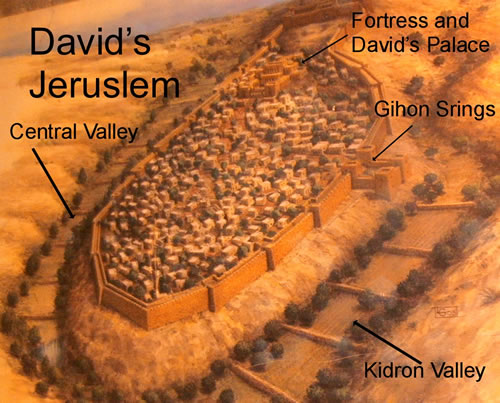
Modern Israel has built itself up based on the principle of creating “facts on the ground” – a complete infrastructure for a functioning nation-state – regardless of sanction, or lack thereof, by the international community. But as important as these “facts on the ground are,” imagine, how important it is for the morale of Israelis, surrounded as they are by enemies intent on their annihilation, to come across “facts underground.” Imagine coming to the confirmed archaeological site of the city and, quite possibly, the palace of ancient Israel’s greatest potentate, the illustrious King David.